Showing posts with label SDI-Punk. Show all posts

Sunday, December 20, 2020

TOP GUN 2: THE SUPERGUN, Or "SDI-Punk" Continues...

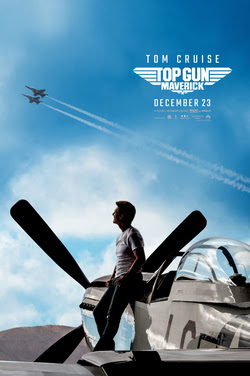
As we are all aware by now, there's a long-delayed sequel to the 1980s military adventure film Top Gun, currently slated to premiere during the summer of 2021. In the present day, Maverick is a test pilot and doing his best to avoid advancing in rank to the point he wouldn't be flying anymore or getting pushed out due to not advancing in rank. However, as my regular readers know, I recently hosted guest posts from author Ken Prescott on a proposed new genre called "SDI-Punk" and films and especially books that would fit. I also wrote a post of my own that emphasized the "punk" elements. When I shared the posts online, Baen author Christopher DiNote suggested that Top Gun would fit in the genre, but I didn't think it was speculative enough--it doesn't have the sort of advanced versions of period technology the way steampunk (Babbage engines, more dirigibles) or dieselpunk (rocket packs, Nazi or Soviet super-science) do.


However, a more elaborate and more "period" Top Gun sequel might fit the bill. There were several incidents in the 1980s where the United States engaged in combat with the forces of Libyan dictator Moammar Gadhafi--one in 1981, two in 1986, and one in 1989, in addition to two incidents of Libyan-sponsored terrorism. During Operation El Dorado Canyon, Gadhafi retaliated against U.S. airstrikes by firing SCUD missiles at a US base in Italy--although they didn't do any significant damage, they scared the stuffing out of the local Italians and the Italian government planned but ultimately didn't go through with a retaliatory attack of their own.

So here's an idea for a Top Gun sequel that includes "SDI-Punk" elements. It could be released in the late 1980s or early 1990s to capitalize on the Libyan incidents or the Gulf War or later, so long as Tom Cruise and Val Kilmer look young enough that it's not a "next generation" film like the upcoming sequel (featuring Goose's son) is. The gist of my idea is that Gadhafi's attack on Lampedusa is more effective--more (and/or more effectively used) SCUD missiles or, to be even more fun, Gadhafi has borrowed the services of Iraqi dictator Saddam Hussein's mercenary scientist Gerald Bull and built one or more "superguns." In real history the project was sabotaged and Bull himself assassinated by Israeli agents, but if Saddam loans Bull to Gadhafi, the Israelis might not view him and his project as a threat since a Libya-based supergun couldn't hit Israel.

So Gadhafi builds one or more doomsday mountains with superguns able to strike targets in Chad (where Gadhafi had been fighting wars already) and Italy. The film starts with Maverick and company participating in the 1986 air battles with the Libyans, but while they're recovering from their mission aboard the carrier or on shore leave in Italy, the Libyan attacks on Italy are much more severe than in real history. We're talking more effective SCUDs, attacks by the supergun that can't be intercepted by Patriot missiles, and with Western casualties and significant physical damage, the US and Italy now have to respond. The climax of the film involves the US Navy pilots escorting an Italian strike package to destroy Gadhafi's mega-guns and mobile SCUD launchers (easier said than done given what happened in real history in 1991). This features a series of air battles more impressive than the climax of the original Top Gun, since the NATO forces would be fighting over enemy territory (i.e. antiaircraft fire that wasn't an issue in the original film) against much larger numbers of enemies. The Mig-28 of the original film might reappear, with the lessons learned from the first film making Maverick's tricks less likely to work. The possibility of capture and torture by Libyan forces would be a realistic possibility, unlike the South Yemeni or whoever the enemy was in the first film. And with a much larger crisis that clearly won't be over in one or two days, Maverick and friends might see antiwar protests on CNN or encounter protesters while on shore leave.

(That's the "punk" element, as 1986 is a little over a decade after Vietnam and the Gulf War hasn't put those ghosts to rest. The so-called "anti-imperialists" will be out in force for this.)

This wouldn't be nearly as happy-go-lucky as the original film, but something more akin to the 1976 film or 2019 film about the Battle of Midway. Shore leave in Italy means romantic subplots or fun scenes, but this will be primarily a war film.

You all like? I'm sure this could make for an interesting fan-fic, or a "serial numbers filed off" original novel. Also, here's a podcast episode on the original Top Gun that I'm part of.

Friday, December 18, 2020

Thoughts On Ken Prescott's Proposed "SDI-Punk"

I'm a member of an online networking forum for writers and a fellow forum member is Ken Prescott, who'd served as a Marine and wrote the Cold War thriller Not By Sight. In a discussion online, he proposed a new sub-genre called "SDI-Punk," in the vein of cyberpunk and its derivatives like steampunk. If one is going with "imaginative history," steampunk is Civil War to WWI, dieselpunk is WWI and WWII, and then you get into atompunk in the 1950s. Prescott's aesthetic is very late Cold War and derives its aesthetic from things like stealth technology, Reagan's Strategic Defense Initiative (popularly described as "Star Wars"), and the mysterious Aurora aircraft. There are also plenty of "roads not taken" in regards to the space program in this period, like the X-30. Finally, "SDI-Punk" features a more muscular approach to the Cold War, as befitting someone of his background. He suggested that the best example of this genre is the Clint Eastwood film Firefox, in which an American pilot infiltrates the Soviet Union to steal a prototype Soviet jet controlled directly by the pilot's brain. However, it's not just all cool aircraft--there's culture stuff like cable TV, yuppies, and rap and social movements like the anti-nuclear and anti-apartheid movements. More on them later.

(Here's a guest post he wrote introducing the concept and here's a follow-up post on works of film and literature set in this genre. Firefox is just the beginning.)

This is something I found very interesting, considering I had recently blogged about adapting Dean Koontz's 1980s-set Watchers into a television series and both of us agreed that Stranger Things and The Americans fit in. Having discussed the concept with him and read his blog posts, here's my spin:

One criticism of steampunk is that it's all parasols, Victorian fashion, and a very rosy-eyed view of imperialism and doesn't take into account things like the labor movement, agitating for women's suffrage, and the ugly reality of imperialism epitomized by, "We have got the Maxim gun and they have not." Dieselpunk's politics tend to be a bit more obvious, with both Indiana Jones and the Rocketeer fighting the Nazis, the Shadow fighting Shiwan Khan (a stand-in for Imperial Japan?), and an older Indiana Jones dealing with both McCarthyite G-Men and the genuine Communist menace of Irina Spalko. Part of "punk" is being subversive of social norms and conventional morals and a big part of cyberpunk is hackers fighting corporate domination and high-tech street gangs and criminal organizations. Although Prescott acknowledged elements of this setting that would subvert the overall neo-Reaganite ethos on display with "morning in America" and Communist and terrorist villains with the anti-nuclear movement and the "Satanic Ritual Abuse" panic that led to a bunch of innocent people being jailed (I'd forgotten about that), I'm going to go a bit further down the rabbit hole.

So if I were writing an "SDI-Punk" story, I'd include more of a "punk" angle much like how I bring labor politics and racial issues into my steampunk fantasy novel Battle for the Wastelands and its companion novella "Son of Grendel." As mentioned in the original post, the 1980s had lots of rebellious movements against the anti-Communist/pro-capitalist consensus--the anti-nuclear movement, the green movement, and the growing agitation for world governments to do something about AIDS. There's also the anti-apartheid movement and the resulting plethora of villainous Afrikaners in films like Lethal Weapon II. Even the conservative Bill Cosby wouldn't let NBC remove anti-apartheid posters from the kids' bedrooms in The Cosby Show.

Since Prescott's goal was to create an aesthetic and setting for writers to play in, here're a couple "SDI Punk" scenario of my own creation that could work:

Sometime in the mid-1980s, South Africa's border wars with its neighbors escalate into a full-blown proxy war in the Arab-Israeli sense of the word. Perhaps South Africa's "destabilization" policies backfire, creating a united front of black-ruled left-wing states that's a conventional military threat rather than real history's seething messes. The US backs South Africa (albeit they're The Friend That Nobody Likes) against the "frontline states" backed by the USSR and Cuba. Worries about another Vietnam (and the massive political blowback the Reagan Administration would get from openly supporting the most flagrantly racist regime in the world) keep the U.S. from sending in troops to prevent a potential Soviet takeover of "the mineral treasure house" of southern Africa (which would also menace the "energy treasure house" of the Persian Gulf. Meanwhile, the sheer distances involved, the growing sinkhole of Afghanistan, and the threat of South African nukes prevent the Soviets from intervening openly. 

However, the US and the Soviets both use the conflict as a chance to test out their newest and fanciest technological toys (either by letting their local proxies use them or sending in their own personnel on a very small scale like the Soviets did in Korea and Vietnam). There's also all sorts of black ops/intelligence skullduggery going around, including attempts by both sides to manage or manipulate popular protest movements. And although AIDS does not appear to have really gotten big in South Africa itself until the early 1990s, more US, Cuban, Soviet, and other Eastern Bloc personnel in Southern African more broadly could provide another victor for HIV to spread either locally or back into their home countries. Such a scenario could inflame the debate about the United States' association with South Africa and the possibility of getting pulled bit by bit into another war and even lead to cross-pollination between the antiwar, anti-apartheid, and anti-AIDS movements. 

(Depending on the personalities involved, one might also see changes in conservatives' attitudes toward AIDS sufferers--they might be more likely to sympathize with a deployed soldier given a bad blood transfusion to save his life or who made one bad decision with a local woman than with a drug addict or a homosexual. And bonus points if some dumbass starts attacking soldiers deployed in Southern Africa as AIDS vectors. Remember this would be around a decade after the controversies over Vietnam, which included instances of disrespect toward veterans. Even if it's not in the movement's best interest, there's always some idiot somewhere and people will talk.)

And although this is not as well known due to the Soviet Union being a closed society less tolerant of domestic political dissent, Afghanistan spawned a Soviet antiwar movement and a growing manpower drain in Africa might add fuel to the fire. The problems that prompted Gorbachev's reforms are still there, even if Prescott's vision requires a stronger USSR, plus internal Soviet politicking is more interesting (and more congruent with reality) than a purely monolithic "Evil Empire."

The Middle East could be another theater for an "SDI-Punk" story...there's Israel's war in Lebanon, the Soviet intervention in Afghanistan, and the Iran-Iraq War. Charles Stross's novella "A Colder War" features the Soviets in Afghanistan and the Iraqis in Iran using Lovecraftian horrors, ultimately culminating in a World War III that features the US deploying atomic-powered bombers carrying Project Pluto nuclear-powered nuclear-armed cruise missiles against none other than Cthulhu. The more cautious/conservative/still-have-PTSD-from-WWII factions of the Soviet leadership aren't going to want an unstable third force on their border and the more aggressive and zealous-for-the-Revolution types might see this as the chance to get warm water ports at long last and put the West's oil supply under Soviet guns. Meanwhile, the US isn't going to want the Soviets to attempt the latter while claiming the former. And it was a war in Iran that spirals into the nuclear holocaust depicted in the amazingly depressing film Threads.

However, a more limited conflict might involve chronic troublemaker Moammar Gadhafi in Libya (who was parodied in the animated Transformers show), since he's so outlandish the Soviets aren't going to go to the mattresses for him. There were real-life skirmishes between Libyan and NATO forces and Gadhafi repeatedly meddled in Chad, so there's plenty of opportunity for "fun" that wouldn't necessarily risk World War III. Hmmm...Libyans as real-life Bond villains with some kind of oil-funded superweapon like Saddam Hussein's Project Babylon? Or, to justify the deployment of something more outlandish, perhaps something more sci-fi oriented like an anti-satellite laser weapon or an independent space program? You could tie in the cultural elements of the 1980s--CNN is reporting live on the early deployments of such things in Chad, devotees of "rap culture" fall for Gadhafi's pan-African schtick and agitate against US intervention, there're more mainstream concerns about another Vietnam, and so instead of an open invasion, you have some kind of balls-to-the-wall covert operation to steal or destroy this weapon like Firefox.

Anybody got any more ideas...?

Tuesday, December 15, 2020

Guest Post: "SDI-Punk" Literature and Film

(This post is the second part of an earlier blog post introducing the concept of "SDI-Punk" as a retrofuturist genre in the vein of steampunk and dieselpunk. Now we continue with existing works of fiction and non-fiction that would actually fit in this genre.)

RESOURCES

The core era of this genre is the 1983-1988 era, but antecedents could be found in the 1970s. Below is a partial list of works I would consider to be in or relevant to the genre.

MOVIES AND TELEVISION

SDI never really made its way to the big screen--or the small one. So, in addition to one piece of actual SDI-punkness, I offer other relevant movies and TV shows set in that era.

The Americans: This series focuses on the lives of Soviet illegals operating in the US during the 1980s. Sometimes, the plot deals with technology theft (which was a recurring theme throughout this period).

Firefox: The one truly SDI-punk movie entry. Underrated Clint Eastwood movie based on a novel by Craig Thomas. An American pilot, haunted by the demons of his time in Vietnam, must infiltrate a Soviet flight test facility and steal the ultimate warplane--and then get past Soviet defenses to get it to the West. An atmospheric score by Maurice Jarre, a decent adaption of the source novel into film (not an easy task at all), excellent flight sequences, and one of Clint Eastwood's more complex performances make this a worthwhile movie.

Robocop Trilogy: SDI plays a background role in the news updates, and some of the punk themes play out into the movies' "Delta City" arc.

The Hunt For Red October: Tom Clancy's debut novel made its way to the screen in 1990, and the results were outstanding. Excellent performances by Alec Baldwin and Sean Connery, excellent use of Navy support, and a storyline that conveyed the tension of the setting (1984) make it well worth watching.

No Way Out: Possibly the best spy movie of the 1980s. Paranoia you can cut with a knife, and multiple surprise-but-perfectly-logical twists keep you guessing beginning to end.

The Soldier: A fun romp that ends up with rogue agents (East AND West) conducting a nuclear standoff, with tons of action throughout. The soundtrack is by Tangerine Dream; it's a time capsule of the early 1980s. (Pay attention during the opening credits; you will see that material again.)

Stranger Things: 1980s period drama with government conspiracies meeting Middle America. (I haven't actually seen this show, but I've heard good things about it from various people I know.)

NOVELS

The pickings are MUCH better here. Below is a mere sampling of the riches to be found.

Dale Brown

Flight of the Old Dog: High-technology weapons, including a B-52 refitted with stealth technology(!), SDI plays a role.

Silver Tower: This one is another core SDI-Punk entry. The American Armstrong Space Station, armed with various weapons including a hyper-powerful laser, may be the only thing that can stop a Soviet invasion of Iran.

Tom Clancy

Cardinal of the Kremlin: Jack Ryan is at the focus of the race between the Americans and the Soviets to develop high-energy lasers for strategic defense, with espionage playing a core role. Ends with what would be an absolutely LEGENDARY covert operation. Definitely core SDI-Punk material.

Jim DeFelice

Coyote Bird: Published right at the end of the Cold War, it posited a US-Japan rivalry and hypersonic superplanes. Technology, pilots, and the interaction between them are the central themes of this novel.

David Drake

Skyripper: Former NSA agent Tom Kelly is called back in to service to manage the defection of a Soviet scientist who has the secret to powering space-based lasers. The kicker: The Soviet scientist is defecting because little voices are telling him that aliens are about to invade Earth. The protagonist isn't a very nice guy, but he has a definite sense of right and wrong, and he is brutally competent at his job.

Fortress: In an alternate history, JFK survived and put into motion Fortress--a space station armed with thousands of nuclear bombs. Problem: Nazis in flying saucers have hijacked it. (No, really.) Tom Kelly (yes, the same guy from Skyripper, different universe) to the rescue! (Oh, dear, the body count is going to be spectacular.)

Payne Harrison

Storming Intrepid: A Soviet agent hijacks a space shuttle carrying the first SDI satellite. America wants it back. Hilarity Ensues.

Donald Kingsbury

The Moon Goddess and the Son: Expanded version of the Analog serial from the late 1970s. The Soviets go into space in a big way in the late 1980s, and the US launches a crash program to beat them. SDI plays a core role. The punk elements revolve more around what happens when one man can become his own military-industrial complex, and how that could interact with strategic forces. In some ways, it hasn't aged well; in others, it's aged so well it's moved from "that's an interesting idea" to downright disturbing.

William Lovejoy

Black Sky: A joint US/Soviet suborbital stealth aircraft program goes up against their Japanese counterparts.

Delta Blue: An elite USAF spaceplane squadron must take on a resurgent Germany before their geothermal power project causes a global calamity.

Delta Green: Renegade Soviet hardliners steal a USAF spaceplane. Sequel to Delta Blue.

Janet Morris 

Warlord: Someone is killing former operatives of a CIA black project aimed at colonizing Mars. The two remaining survivors must navigate a covert war between the US and the USSR for control of space and flush out the killers. 

MEDUSA (With Chris Morris): Pure SDI-Punk. A CIA operative and a hotshot Air Force test pilot must stop a Soviet provocation aimed at American orbital defenses. Superplanes, lasers, and old-school spying and mayhem all play a part.

Active Measures (with David Drake): More SDI-Punk. The American President is a  Soviet mole, and things are cheerfully going to hell at home and abroad--and in space. Multiple spy plots crash into each other. First description I ever saw of a self-forging projectile charge (published in 1985).

M. E. Morris

Alpha Bug: A new Soviet space weapon threatens America's nuclear arsenal. A medically retired astronaut may be the only guy who can stop it. Action ranges from infiltrating Baikonur Cosmodrome to a dogfight over the Black Sea, with a final confrontation in orbit. SDI-Punk core material.

Ralph Peters

The War in 2020: Published in 1990, as the Cold War was waning, and America was fearing Japanese economic warfare. The US 7th Cavalry Regiment, equipped with the latest high-tech tilt-rotor gunships, is fighting a Japanese-backed Islamic invasion of Soviet Central Asia. The author described it as a novel of nightmares, and the description fits. SDI is in the background, as space-based defenses make central nuclear war impossible--and all manner of mayhem inevitable.

Gary Allen Ruse

A Game of Titans: Published in 1976. The USA and the USSR are squaring off in a remote corner of the Pacific for high stakes. The Soviet Navy sends their (then-new) V/STOL carrier Kiev; the United States Air Force sends a nuclear-powered airship(!), the Grand Eagle. The airship carries drones (then called "remote-piloted vehicles," or RPVs), a laser weapon(!), and Harrier jump-jets. Ruse takes an incredible premise and sells it well.

D. J. Savage

The Glass Lady: A prototype American orbital laser has malfunctioned and destroyed a Soviet research satellite. A joint US/Soviet space shuttle mission is the only chance to deactivate the weapon; if the mission fails, the shuttle crew will be "terminated with extreme prejudice."

Craig Thomas

Firefox: As mentioned above, American pilot Mitchell Gant must steal the ultimate warplane from a test facility deep inside the Soviet Union--and make it back out.

Firefox Down: Takes up right where Firefox ended. Forced to land on a frozen lake in Finland due to battle damage, Gant must escape Soviet capture while the British seek to recover the aircraft itself.

Winter Hawk: Gant is back, flying a stolen Hind helicopter gunship into the Soviet Union to rescue a CIA agent with information on Soviet space-based lasers, vitally needed to close a loophole in a soon-to-be-implemented arms treaty. But there is far more at stake. Complex plot and characterization, shifting alliances, and the stifling environment of Baikonur Cosmodrome make this one of Thomas' best novels.

ANTHOLOGIES

Jerry Pournelle

There Will Be War: Ten volumes published from 1982 to 1990. Many stories and nonfiction essays about SDI and its potential impact on the world.

Dean Ing

Firefight 2000: Fiction and technology essays. Some interesting technology notions that are related to SDI.

NON-FICTION

Dean Ing & Leik Myrabo

The Future of Flight: A 1985 book on potential future aerospace technologies, most of which revolve around using high-energy lasers to beam energy to aerospace craft. Some math, but the authors do their best to keep it accessible to the layman.

David Pahl

Space Warfare and Strategic Defense: Large-format hardcover with gorgeous full-color art and photographs examining SDI from multiple angles; the author examines both the promise and the perils of orbital warfare and ballistic missile defenses.

Curtis Peebles

Battle for Space: Published in 1985. Examines the history and prospects for development of military space programs, including anti-satellite weapons and the Strategic Defense Initiative.

Jerry Pournelle & Dean Ing

Mutual Assured Survival: A 1984 book discussing (and advocating) ballistic missile defenses. Discusses technologies, project management, and places the argument in a larger context of renewing American space exploration.

TABLETOP GAMES

Steve Jackson Games

Orbit War: Originally published in 1984 in the SJG magazine, The Space Gamer. Interesting game of orbital warfare; the game gives a somewhat realistic model for orbital movement and even the Earth's rotation, creating a very dynamic battlefield. Units include space shuttles, space stations, killer satellites, nuclear weapons, mines, etc. Somewhat complex, but worthy of study. (The time I used orbital mechanics to slingshot a nuke into my opponent's space station was a thing of beauty.)

About the author: Ken Prescott is a Marine Corps veteran. He has worked as a management analyst, medical coder, and human resources specialist. His novel Not By Sight is available as a Kindle ebook from Amazon. He lives with his wife in San Diego, California.
Guest Post: Introducing SDI-PUNK, Or The Once And Future 1980s

It's morning in America, it's high noon in the Cold War, and America is on the HIGH-WA-AY TO . . . THE DAN-GER ZONE!

(Admit it, dear reader: you sang that last bit along with me.)

SDI-Punk is yet another form of retrofuturism, just as Steampunk reflects the Victorian vision of the future with its airships and steam-powered hardware, Dieselpunk represents a weird World War II, and Atompunk gives us the future as seen from a time when we really did vaporize entire islands as physics experiments.

SDI-Punk crosses the line of departure in the late 1970s and early 1980s. It is focused on the military, intelligence gathering, and the military-industrial complex. The centerpiece of SDI-Punk is right there on the label: the Strategic Defense Initiative (SDI) and advanced aerospace technologies. The purpose of SDI was two-fold; first, to do research and development on ballistic missile defense, in order to invert the calculus that favored offense over defense; second, to help open a new "technological front" in the Cold War, outflanking the entire Soviet military industrial complex.

In our history, SDI was, arguably, the killing blow to the edifice that was the Soviet Union. German Chancellor Helmut Schmidt once quipped that the USSR was "Upper Volta with missiles." Without missiles, the USSR was a ramshackle imperium where the bosses pretended to pay the workers, and in return the workers pretended to work. SDI eventually died quietly in 1993, barely a decade after it began, apparently no longer necessary because the Cold War was over.

But what if the USSR had been made of somewhat sterner stuff? SDI may have been championed by a Republican President, but it had bipartisan support in an era where "conservative Democrats" still existed. Had the Cold War still been going by the time a Democrat moved into 1600, SDI might have had a bureaucratic and legislative momentum of its own, perhaps eventually leading to deployed weapons.

SDI was just one piece of a much larger scheme of technological flanking maneuver in both the military and civilian realms. Other pieces included stealth aircraft (which would render most of the USSR's very expensive air defense network useless), smart weapons (more targets killed per sortie flown), advanced communications and intelligence systems (making the entire force more responsive and agile), Tomahawk land attack missiles (making US Navy surface ships--which had, since the end of WW2, been relegated to carrier escort missions--into lethal threats that would need to be tracked just like the carriers; this would overload the Soviet ocean surveillance system by giving it too many things to do at once), and using the KGB's penchant for technological theft to pass sabotaged equipment and unworkable designs to the Soviet Union.

The result of all that military investment played out on American television screens during Operation Desert Storm, when a U.S.-led coalition took only six weeks to turn the fourth-largest army in the world into the second-largest army in Iraq.

But enough of geopolitics and grand strategy. Like all literary punk, SDI-Punk is as much about the aesthetic and zeitgeist as it is about story and characters. So, what do we have to work with?

MORNING IN AMERICA

We were coming out of the post-Apollo, post-Vietnam, and post-1974 oil shock doldrums. NASA was returning to manned spaceflight with the Shuttle; it was easy to envision successor systems that would have a lower cost per pound to orbit. We actually started doing blue-collar stuff in space--fixing busted hardware in low orbit instead of simply writing it off.

High-end sports cars were almost universally wedge-shaped. (This is the way! I have spoken!)

Women's shoulders were padded, and women's hair was big. The mullet was popular among men, although not actually called that at the time; sometimes it was called "helmet hair," or the "Tennessee Tophat." Lee Iacocca made the white collar on a colored shirt the power fashion statement for men.

Personal computers were in their infancy (most home computers through the period had less memory than a typical CPU has for cache memory today), and networking was even more primitive (2400 baud over a dial-up modem was considered extremely quick until about 1988 or so). Nobody had any real idea what would happen, so predictions were all over the place, and almost nobody foreseeing anything like the World-Wide Web, social networking, online shopping, or Netflix. Computers and their impact on culture were trivial compared to today, and most of the impact was hype as opposed to substance. Computer networks, when they did appear and did play a role, looked like over-glorified USENET, without much in the way of graphics or video.

In Maryland, an insurance salesman named Tom Clancy wrote The Hunt For Red October, which became a sleeper best-seller, was praised by President Reagan as "the perfect yarn," and finally gave an identity to a genre known as the "technothriller," which fused real-world political and military strategy, operations, and military/law enforcement tactics into (usually) readable popular literature.

Music was . . . well, it was the 1980s. (You really did have to be there.) MTV actually played music videos. Hair metal, synthpop, rap music, punk rock, album-oriented rock, heartland rock, and many other genres coexisted happily, cross-pollinated one another, and even (in my never humble opinion) reached their peak expression in this era. 

HIGH NOON IN THE COLD WAR

Detente was dead, mostly because Ivan didn't play nice in the 1970s. The Cold War fell to a nadir in 1983, with the following events:

March: In a televised speech, President Ronald Reagan asked, rhetorically, if it would not be better to save lives, rather than to avenge them? That speech was the beginning of the Strategic Defense Initiative. Critics labeled the idea "Star Wars" and joked about "Ronnie Raygun." Most ordinary folks thought it was a good idea.

September: Korean Air Lines Flight 007 was shot down after intruding into Soviet airspace (the West maintained the intrusion was accidental; the Soviets insisted that the plane was on an espionage mission). A false alarm in Moscow occurs when an early warning satellite over North America gives false indications of an American strategic missile launch. The duty controller overrides the false alerts.

October: The US invades Grenada to prevent it from becoming a Soviet satellite. This freaked out the Soviet Union, because up to that point their understanding of the rules was "What's mine is mine, and if I can grab it, what's yours is mine, too." The Americans weren't supposed to grab stuff off of the Soviets! 

November: A NATO command post exercise, "Able Archer," is much more extensive than usual. The Soviets interpret this as a sign of a possible first strike by the United States, and go to nuclear alert in Eastern Europe.

Doctrinal revolution was underway inside the military, as the American way of war changed radically in the air, land, and sea domains (much of it coming out of the lessons of Vietnam--failure is a very good teacher), and space becoming a potential fourth domain to military operations. 

The 1980s aerospace future was stealthy (manned) combat aircraft; easy access to space with a manned space station, and eventually a moonbase; laser battle stations would patrol the cislunar void; and hypersonic airliners would fly to the other side of the world in just two hours. (Implied in that last bit: hypersonic bombers would deliver conventional or nuclear weapons to the other side of the world in just two hours, or the Pentagon would take $4,000,000,000 off the price tag. Avoid the Noid!)

POLITICAL HORIZONS: THINKING GLOBALLY, ACTING LOCALLY

The political arguments of this era are interesting because we can see the hazy outlines of today's politics that are driven by global economics, viral videos, and the 24-hour news cycle.

CNN went on the air during this time, and began building the 24-hour news cycle.

The big SDI-related tie-in was the nuclear freeze movement, which arguably spawned SDI as a response. People were made uneasy by talk of building up US nuclear forces, and a wide swath of the political spectrum--generally left of center, but some on the right were at least sympathetic to the idea--settled on the idea of freezing nuclear weapons acquisition and research in place. Whether or not this was a good idea, it became very popular. A counterpart movement arose in Europe due to the impending deployment of improved theater-level nuclear forces by the United States. SDI came about in response to these ideas; perhaps defenses against ballistic missiles would make them less useful.

Political activism ranged from benefit concerts to fight famine in Ethiopia to calls for American schools and pension funds to divest themselves of companies based in or with significant business interests in South Africa as a means of fighting against apartheid. The rise of satellite news and modern telecommunications meant that local activism and non-governmental entities could begin to affect global issues, continuing a process that had begun in Vietnam, with the war being brought to American living rooms every night. A truly "punk" SDI-Punk would take this into account.

The flip side of this was that moral panics could be started in the same way. The 1980s saw a great deal of fear of "satanic ritual abuse" of children, arguably started by the McMartin Preschool case in Manhattan Beach, California. Sloppy analysis and even sloppier questioning of children (frequently involving the children being led by their questioners to the desired answers) led to convictions and plea bargains; eventually, the case petered out in a series of acquittals and hung juries years later. The sensational allegations are much better remembered than the final results.

Rural America was starting its decline; the farm foreclosure crisis began in the early 1980s as a decline in commodity prices hit heavily-leveraged farmers hardest. Further exacerbating the crisis was the rise of globalization, with maquiladoras (foreign-owned factories in Mexico) taking over production from factories located in small towns all across rural America. Losing a small factory in Chicago is bad enough for those who work there; losing that same factory in a town of 10,000 is a regional economic calamity. This made for a one-two punch that sometimes turned what had been thriving communities into near ghost towns where the only remaining industries were growing marijuana, cooking meth, and/or facilitating trafficking, whether in narcotics or people. Farm Aid was a benefit concert in 1985 to help family farms that eventually evolved into a permanent fixture as the artists and the sponsors realized the problems weren't going away.

Urban renewal and gentrification had been topics of discussion in policy and academic circles prior to the 1980s, but the rise of "Yuppies" (Young Urban Professionals) and entrepreneurship brought the conflicts inherent to these efforts from the back rooms of city managers and local community news to the big screen via the Robocop films. Homelessness, gentrification, and urban crime were all examined through these lenses.

BADDIES, BIG AND SMALL

The big scale antagonists are those devious, never-to-be-fully-trusted Commies in the Kremlin. Even in the very endgame of the Cold War, and absolutely no one expected the entire edifice of Soviet Communism and its satellite states to just collapse as they did. (I was on active duty in 1989; if you'd told me on January 1st that by the end of the year, the Berlin Wall would be torn down and German reunification would be on the negotiating table, I would've laughed in your face.)

Lesser antagonists would include various flavors of terrorist (transnational terrorism was a much different beast than today; Moscow funded terrorism in the Free World on the theory that the enemy of their enemy was, at the very least, a potentially useful idiot), drug lords, and regional powers. 

One notable omission from the rogues' gallery of the era: China. They weren't expected to ever be a major player outside of low-end manufacturing. 

(Shows you how much we knew.)

Other possible antagonists, especially for a noir/gritty story, might include devious defense contractors falsifying test results (this has always been a problem, particularly among low-end "schlocker" subcontractors supplying components to larger firms). 

Near the end of this era, Japan began to appear as a potential threat, with several novels focusing on the nature of changing technology and the fear of losing entire economic sectors to Japanese competition; a few of these posited that Japan's increasing economic power might lead to military conflict with a (relatively or actually) declining America.

The 1980s were the decade of the corporate raider, leveraged buy-outs, junk bonds, and insider trading. This could potentially affect military contractors. One could even have Soviet-financed corporate raiding . . .

The current wave of 1980s nostalgia shows no real sign of ending anytime soon; the tropes of the SDI-Punk genre and the 1980s in general are a fruitful vein just waiting to be mined by creators in all fields.

Up next...existing works of "SDI-Punk" in film and especially literature...

About the author: Ken Prescott is a Marine Corps veteran. He has worked as a management analyst, medical coder, and human resources specialist. His novel Not By Sight is available as a Kindle ebook from Amazon. He lives with his wife in San Diego, California.