Showing posts with label Libya. Show all posts

Saturday, December 26, 2020

My Recent Reading List (December 2020)

Being that I'm a high-school teacher, I get a lot more time off than the average bear. This past week-ish, I've been using my free time to either catch up on reading or take notes from books I've read previously but had sitting around for weeks or months.

Here's a partial list of books I've read, books I'm reading, and books I've heard about and am trying to get hold of. If any of these sound interesting, please buy through Amazon because these are Associates links. :)


Bitterly Divided: The South's Inner Civil War-This is about how the South was far from united during the (American) Civil War. It makes the very strong case that if you combined the poor whites and the slaves, the majority of people in the South actually opposed secession, and many people who had supported it became disillusioned as the war went on owing to the mistreatment of the common people by the Confederate government, widespread poverty at home, draft-dodging by the rich and the plantation owners, etc. This is prime research material for the sequels to Battle for the Wastelands, since this world is roughly between the Civil War and WWI in terms of technology and social development (with the exception of slavery) and the late-war Confederacy provides a good example of how a society during this time period could collapse internally.

(The Confederacy also made some obvious mistakes that Grendel, the Wastelands series' Big Bad, can avoid. For example, the planters promised to grow food crops to feed the Confederate armies...but instead grew cotton and tobacco for the mountains of cash they could make. Although the cotton trade helped the Confederacy secure armaments and other useful materials from abroad--the book doesn't touch on that--it also contributed to starvation at home that prompted riots in the cities and desertion from the armies. Grendel, who's been a soldier since he was fifteen and is now in his mid fifties, will have the experience to know this is a bad idea and the dictatorial power and strength of will to make sure this doesn't happen.)

Sapiens: A Brief History of Humankind-A condensed history of the human race I got as a birthday present but only now just got around to reading. Very simple and to the point, very detailed. Some interesting ideas about the nature of human thought processes versus that of our extinct kindred like the Neanderthals and how that extends to things like the establishment of communities beyond the tribe (i.e. a nation, a religion, an economic system, etc). I'd already read the author's book Homo Deus, but not this one.

Artemis-Another birthday book I've only just gotten started on. Crime and shenanigans in the first city on the Moon. :) This is by the author of The Martian, which I found in a free-book box but haven't read yet.

A People's History of the Civil War-This covers a lot of the same ground as Bitterly Divided (it is, after all, by the same author), but also includes the experiences of Native Americans out west and poor people, white and black, in the North. Basically there was a very strong anti-conscription movement in the North, which is typically only discussed in the context of the New York City draft riots. Given how I've noted the steampunk era was full of class conflict, I can mine this for information as well.

Stars In Their Courses: The Gettysburg Campaign-In Battle for the Wastelands and its companion novella "Son of Grendel," most of the action is centered on a platoon (30-40 men) or company (100 men). The largest combat sequences in Battle involve forces that are perhaps a brigade (3,000 to 5,000 men) in size. Things scale up in the sequels significantly. I've also requested author Shelby Foote's novel about the Battle of Shiloh from the library to similarly pillage, since a novel would go into more detail about the experiences of a man on the ground so to speak.

A Nest of Corsairs: The Fighting Karamanlis of Tripoli-This is an older book about a pirate dynasty that ruled Tripoli as the (nominal) subordinates of the Ottoman sultan, but it has some truly vivid descriptions of the environment of Ottoman Tripoli that I copied wholesale into my notes to use as inspiration for sequences in the Wastelands world involving the Iron Desert as well as a "flintlock fantasy" set in a fantasyland version of the early modern Mediterranean. Although it's old-fashioned in some of its language, it's a very interesting read.

Dominion: How The Christian Revolution Remade The World-The Cobb County library has it but the Atlanta-Fulton library doesn't, so I requested an interlibrary loan. Since those are closed down right now, who knows when I'll actually read it. This book discusses the Christianization of Rome and the resulting effects on both Roman and broader Western society. Based on the reviews, the author (although not a Christian and sometimes very critical of Christianity) makes the argument that this improvement has been broadly positive.

Sea Stories: My Life In Special Operations-This is an autobiography of Admiral William McRaven, a longtime Navy SEAL who ultimately planned the raid that killed Osama bin Laden. A lot of interesting stuff about the military in the late 20th and early 21st Centuries, plus some of the Wastelands books involve dirigible raids with assassination in mind, so I can use this as a model.

The Great Influenza: The Story of the Deadliest Pandemic In History-I haven't read this yet, but I have put it on hold from the library. It's about the Spanish Flu, which spread like COVID-19 but killed far worse, and its effect on science, world politics, etc. There are a bunch of people ahead of me in the line for it at the library, so a lot of people are seeing the COVID-19 parallels.

Civil War Commando: William Cushing and the Daring Raid to Sink The Ironclad CSS Albemarle-I vaguely remember reading about this episode as a child in one of my grandparents' Civil War books, but I recently heard about this on the History Unplugged podcast. This sounds like a pretty cool episode in and of itself, plus it's more research material for Wastelands. The Atlanta-Fulton library doesn't have it and interlibrary loans are shut down, so I might have to bite the bullet and buy it.
Sunday, December 20, 2020

TOP GUN 2: THE SUPERGUN, Or "SDI-Punk" Continues...

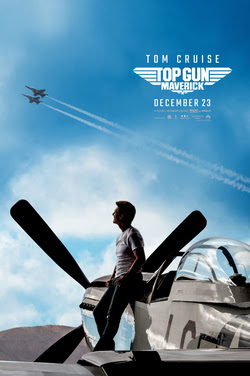
As we are all aware by now, there's a long-delayed sequel to the 1980s military adventure film Top Gun, currently slated to premiere during the summer of 2021. In the present day, Maverick is a test pilot and doing his best to avoid advancing in rank to the point he wouldn't be flying anymore or getting pushed out due to not advancing in rank. However, as my regular readers know, I recently hosted guest posts from author Ken Prescott on a proposed new genre called "SDI-Punk" and films and especially books that would fit. I also wrote a post of my own that emphasized the "punk" elements. When I shared the posts online, Baen author Christopher DiNote suggested that Top Gun would fit in the genre, but I didn't think it was speculative enough--it doesn't have the sort of advanced versions of period technology the way steampunk (Babbage engines, more dirigibles) or dieselpunk (rocket packs, Nazi or Soviet super-science) do.


However, a more elaborate and more "period" Top Gun sequel might fit the bill. There were several incidents in the 1980s where the United States engaged in combat with the forces of Libyan dictator Moammar Gadhafi--one in 1981, two in 1986, and one in 1989, in addition to two incidents of Libyan-sponsored terrorism. During Operation El Dorado Canyon, Gadhafi retaliated against U.S. airstrikes by firing SCUD missiles at a US base in Italy--although they didn't do any significant damage, they scared the stuffing out of the local Italians and the Italian government planned but ultimately didn't go through with a retaliatory attack of their own.

So here's an idea for a Top Gun sequel that includes "SDI-Punk" elements. It could be released in the late 1980s or early 1990s to capitalize on the Libyan incidents or the Gulf War or later, so long as Tom Cruise and Val Kilmer look young enough that it's not a "next generation" film like the upcoming sequel (featuring Goose's son) is. The gist of my idea is that Gadhafi's attack on Lampedusa is more effective--more (and/or more effectively used) SCUD missiles or, to be even more fun, Gadhafi has borrowed the services of Iraqi dictator Saddam Hussein's mercenary scientist Gerald Bull and built one or more "superguns." In real history the project was sabotaged and Bull himself assassinated by Israeli agents, but if Saddam loans Bull to Gadhafi, the Israelis might not view him and his project as a threat since a Libya-based supergun couldn't hit Israel.

So Gadhafi builds one or more doomsday mountains with superguns able to strike targets in Chad (where Gadhafi had been fighting wars already) and Italy. The film starts with Maverick and company participating in the 1986 air battles with the Libyans, but while they're recovering from their mission aboard the carrier or on shore leave in Italy, the Libyan attacks on Italy are much more severe than in real history. We're talking more effective SCUDs, attacks by the supergun that can't be intercepted by Patriot missiles, and with Western casualties and significant physical damage, the US and Italy now have to respond. The climax of the film involves the US Navy pilots escorting an Italian strike package to destroy Gadhafi's mega-guns and mobile SCUD launchers (easier said than done given what happened in real history in 1991). This features a series of air battles more impressive than the climax of the original Top Gun, since the NATO forces would be fighting over enemy territory (i.e. antiaircraft fire that wasn't an issue in the original film) against much larger numbers of enemies. The Mig-28 of the original film might reappear, with the lessons learned from the first film making Maverick's tricks less likely to work. The possibility of capture and torture by Libyan forces would be a realistic possibility, unlike the South Yemeni or whoever the enemy was in the first film. And with a much larger crisis that clearly won't be over in one or two days, Maverick and friends might see antiwar protests on CNN or encounter protesters while on shore leave.

(That's the "punk" element, as 1986 is a little over a decade after Vietnam and the Gulf War hasn't put those ghosts to rest. The so-called "anti-imperialists" will be out in force for this.)

This wouldn't be nearly as happy-go-lucky as the original film, but something more akin to the 1976 film or 2019 film about the Battle of Midway. Shore leave in Italy means romantic subplots or fun scenes, but this will be primarily a war film.

You all like? I'm sure this could make for an interesting fan-fic, or a "serial numbers filed off" original novel. Also, here's a podcast episode on the original Top Gun that I'm part of.

Friday, December 18, 2020

Thoughts On Ken Prescott's Proposed "SDI-Punk"

I'm a member of an online networking forum for writers and a fellow forum member is Ken Prescott, who'd served as a Marine and wrote the Cold War thriller Not By Sight. In a discussion online, he proposed a new sub-genre called "SDI-Punk," in the vein of cyberpunk and its derivatives like steampunk. If one is going with "imaginative history," steampunk is Civil War to WWI, dieselpunk is WWI and WWII, and then you get into atompunk in the 1950s. Prescott's aesthetic is very late Cold War and derives its aesthetic from things like stealth technology, Reagan's Strategic Defense Initiative (popularly described as "Star Wars"), and the mysterious Aurora aircraft. There are also plenty of "roads not taken" in regards to the space program in this period, like the X-30. Finally, "SDI-Punk" features a more muscular approach to the Cold War, as befitting someone of his background. He suggested that the best example of this genre is the Clint Eastwood film Firefox, in which an American pilot infiltrates the Soviet Union to steal a prototype Soviet jet controlled directly by the pilot's brain. However, it's not just all cool aircraft--there's culture stuff like cable TV, yuppies, and rap and social movements like the anti-nuclear and anti-apartheid movements. More on them later.

(Here's a guest post he wrote introducing the concept and here's a follow-up post on works of film and literature set in this genre. Firefox is just the beginning.)

This is something I found very interesting, considering I had recently blogged about adapting Dean Koontz's 1980s-set Watchers into a television series and both of us agreed that Stranger Things and The Americans fit in. Having discussed the concept with him and read his blog posts, here's my spin:

One criticism of steampunk is that it's all parasols, Victorian fashion, and a very rosy-eyed view of imperialism and doesn't take into account things like the labor movement, agitating for women's suffrage, and the ugly reality of imperialism epitomized by, "We have got the Maxim gun and they have not." Dieselpunk's politics tend to be a bit more obvious, with both Indiana Jones and the Rocketeer fighting the Nazis, the Shadow fighting Shiwan Khan (a stand-in for Imperial Japan?), and an older Indiana Jones dealing with both McCarthyite G-Men and the genuine Communist menace of Irina Spalko. Part of "punk" is being subversive of social norms and conventional morals and a big part of cyberpunk is hackers fighting corporate domination and high-tech street gangs and criminal organizations. Although Prescott acknowledged elements of this setting that would subvert the overall neo-Reaganite ethos on display with "morning in America" and Communist and terrorist villains with the anti-nuclear movement and the "Satanic Ritual Abuse" panic that led to a bunch of innocent people being jailed (I'd forgotten about that), I'm going to go a bit further down the rabbit hole.

So if I were writing an "SDI-Punk" story, I'd include more of a "punk" angle much like how I bring labor politics and racial issues into my steampunk fantasy novel Battle for the Wastelands and its companion novella "Son of Grendel." As mentioned in the original post, the 1980s had lots of rebellious movements against the anti-Communist/pro-capitalist consensus--the anti-nuclear movement, the green movement, and the growing agitation for world governments to do something about AIDS. There's also the anti-apartheid movement and the resulting plethora of villainous Afrikaners in films like Lethal Weapon II. Even the conservative Bill Cosby wouldn't let NBC remove anti-apartheid posters from the kids' bedrooms in The Cosby Show.

Since Prescott's goal was to create an aesthetic and setting for writers to play in, here're a couple "SDI Punk" scenario of my own creation that could work:

Sometime in the mid-1980s, South Africa's border wars with its neighbors escalate into a full-blown proxy war in the Arab-Israeli sense of the word. Perhaps South Africa's "destabilization" policies backfire, creating a united front of black-ruled left-wing states that's a conventional military threat rather than real history's seething messes. The US backs South Africa (albeit they're The Friend That Nobody Likes) against the "frontline states" backed by the USSR and Cuba. Worries about another Vietnam (and the massive political blowback the Reagan Administration would get from openly supporting the most flagrantly racist regime in the world) keep the U.S. from sending in troops to prevent a potential Soviet takeover of "the mineral treasure house" of southern Africa (which would also menace the "energy treasure house" of the Persian Gulf. Meanwhile, the sheer distances involved, the growing sinkhole of Afghanistan, and the threat of South African nukes prevent the Soviets from intervening openly. 

However, the US and the Soviets both use the conflict as a chance to test out their newest and fanciest technological toys (either by letting their local proxies use them or sending in their own personnel on a very small scale like the Soviets did in Korea and Vietnam). There's also all sorts of black ops/intelligence skullduggery going around, including attempts by both sides to manage or manipulate popular protest movements. And although AIDS does not appear to have really gotten big in South Africa itself until the early 1990s, more US, Cuban, Soviet, and other Eastern Bloc personnel in Southern African more broadly could provide another victor for HIV to spread either locally or back into their home countries. Such a scenario could inflame the debate about the United States' association with South Africa and the possibility of getting pulled bit by bit into another war and even lead to cross-pollination between the antiwar, anti-apartheid, and anti-AIDS movements. 

(Depending on the personalities involved, one might also see changes in conservatives' attitudes toward AIDS sufferers--they might be more likely to sympathize with a deployed soldier given a bad blood transfusion to save his life or who made one bad decision with a local woman than with a drug addict or a homosexual. And bonus points if some dumbass starts attacking soldiers deployed in Southern Africa as AIDS vectors. Remember this would be around a decade after the controversies over Vietnam, which included instances of disrespect toward veterans. Even if it's not in the movement's best interest, there's always some idiot somewhere and people will talk.)

And although this is not as well known due to the Soviet Union being a closed society less tolerant of domestic political dissent, Afghanistan spawned a Soviet antiwar movement and a growing manpower drain in Africa might add fuel to the fire. The problems that prompted Gorbachev's reforms are still there, even if Prescott's vision requires a stronger USSR, plus internal Soviet politicking is more interesting (and more congruent with reality) than a purely monolithic "Evil Empire."

The Middle East could be another theater for an "SDI-Punk" story...there's Israel's war in Lebanon, the Soviet intervention in Afghanistan, and the Iran-Iraq War. Charles Stross's novella "A Colder War" features the Soviets in Afghanistan and the Iraqis in Iran using Lovecraftian horrors, ultimately culminating in a World War III that features the US deploying atomic-powered bombers carrying Project Pluto nuclear-powered nuclear-armed cruise missiles against none other than Cthulhu. The more cautious/conservative/still-have-PTSD-from-WWII factions of the Soviet leadership aren't going to want an unstable third force on their border and the more aggressive and zealous-for-the-Revolution types might see this as the chance to get warm water ports at long last and put the West's oil supply under Soviet guns. Meanwhile, the US isn't going to want the Soviets to attempt the latter while claiming the former. And it was a war in Iran that spirals into the nuclear holocaust depicted in the amazingly depressing film Threads.

However, a more limited conflict might involve chronic troublemaker Moammar Gadhafi in Libya (who was parodied in the animated Transformers show), since he's so outlandish the Soviets aren't going to go to the mattresses for him. There were real-life skirmishes between Libyan and NATO forces and Gadhafi repeatedly meddled in Chad, so there's plenty of opportunity for "fun" that wouldn't necessarily risk World War III. Hmmm...Libyans as real-life Bond villains with some kind of oil-funded superweapon like Saddam Hussein's Project Babylon? Or, to justify the deployment of something more outlandish, perhaps something more sci-fi oriented like an anti-satellite laser weapon or an independent space program? You could tie in the cultural elements of the 1980s--CNN is reporting live on the early deployments of such things in Chad, devotees of "rap culture" fall for Gadhafi's pan-African schtick and agitate against US intervention, there're more mainstream concerns about another Vietnam, and so instead of an open invasion, you have some kind of balls-to-the-wall covert operation to steal or destroy this weapon like Firefox.

Anybody got any more ideas...?

Monday, March 21, 2011

Up-To-The-Second Libyan War News

I was checking out FreeRepublic today and someone posted the following link.

http://www.blogsofwar.com/libya/

It's got various Twitter feeds flowing in so one can get all sorts of information.  A lot of it is nonsense or rumor, I imagine, but it's got some interesting factoids like how the Gadhafi government is supposedly killing cattle near Zintan to deny the rebels food and all males aged 16 or old in al-Zawiyah (sp?) have gone missing.

(Shades of cities taken by the Serbs in Bosnia in which Muslim males were killed.  I suspect something similar has happened if this account is true.)

It's also got live Al-Jazeera in English, which I don't think is available in the United States.  It's pretty interesting--the narrators all sound British rather than Arabic.