Showing posts with label Johnny Depp. Show all posts

Saturday, August 9, 2014

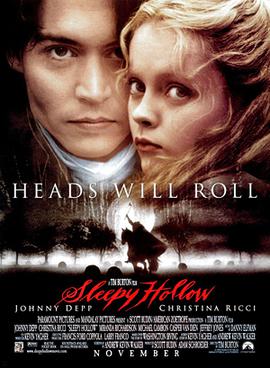
Blast from the Past Movie Review: Sleepy Hollow (1999)

The other night for the podcast Myopia: Defend Your Childhood I'm doing with my friend Nick, I watched the film Sleepy Hollow (1999). Here's the actual recording. The "blast from the past movie review" train continues rolling...


The Good

*The atmosphere and colors are really well-done. It's a beautiful, well-shot film. Apparently this is something director Tim Burton is really good at.

*The concept is really quite creative. Making the Headless Horseman into a murderous movie villain could've gone into pure slasher territory (and according to the Wikipedia entry, that's where it was going before Tim Burton got involved). Instead, we get something a lot smarter and generally better. I'm not going to go into a lot of detail for fear of spoilers, but I do like the overall plot. And the Horseman himself is really quite impressive.

*Johnny Depp did a good job playing Ichabod Crane, a police officer and a big fan of rationalism, the Enlightenment, etc. rather than a gold-digging schoolteacher. Even when he's finally convinced that the Headless Horseman is real, he still applies his rationalist, scientific approach to deduce that it's not some just a monstrous hell-fiend gratuitously murdering people, but something with a purpose. He's also somewhat gray--on more than one occasion he puts others between himself and danger, albeit fairly subtly and perhaps even unconsciously. And he's afraid of spiders and prone to fainting.

*Although my compatriots didn't receive Casper Van Dien's presence in the film very well when he was first introduced, I did like his version of Brom Bones. The film retains his territorial, possessive attitude toward Katrina Van Tassel, but he's not a blowhard bully (as he is in the animated film). In fact, he takes on the Headless Horseman and puts up a pretty impressive fight.

*Given the gadgets people use in the film, you could credibly call it steampunk. Ichabod has got a cool medical bag with brass shelves that pop out, while Brom has got some kind of steampunk sniper rifle. It's awesome.

The Bad

*The movie comes off at times as neo-pagan religious propaganda. A character is saved from a bullet by a book of magic spells rather than by a Bible or cross (the latter I remember quite well from The Three Musketeers film from the early 1990s), a Puritan preacher is anti-intellectual and corrupt, a church only becomes a sanctuary from the Headless Horseman when one of the good witches draws a charm to protect a loved one from evil on the floor, and a character has a free-spirited witch mother who is abused and ultimately murdered (in a torture chamber hidden in a church no less) by a grim and stereotypically evil Puritan father. Meanwhile, Ichabod is a skeptic and the rest of the sympathetic characters are witches. The obvious response is that having symbols of the Christian faith protecting people from physical danger (i.e. bullets) or spiritual foes is Christian propaganda, but that doesn't explain the purely negative portrayal of Christians in the film. Young Masbath, the boy who becomes Ichabod's helper to help avenge his murdered father, could've been developed as a good Christian character, given how he tells Ichabod that his mother is in Heaven and now his father is there to take care of her. That's similar to what I did with the Janissary Mehmed in my short story "The Beast of the Bosporus" on the advice of my writing group to avoid accusations of anti-Muslim prejudice (given how other Muslim characters are drunks or practitioners of dark magic). However, a bad witch explicitly describes making a pact with Satan, a figure not present in any neo-pagan religion I'm aware of.

*The Headless Horseman can be harmed (or at least knocked around) by blades or bullets but, since he's already dead, not killed. There's a scene where a building is blown up with the Horseman in it, but he emerges without a scratch. It would've been a lot cooler if the characters thought they'd killed him but instead he emerges from the burning building on fire and the flames slowly die off. That would have been visually awesome.

*Christopher Walken, who plays the Horseman in scenes when he has his head, is a goggled-eyed lunatic who rasps and snarls a lot but never actually speaks coherently. At times he was unintentionally hilarious, especially with his bizarre Albert Einstein-esque hair.

*There's a scene where a character lurks in a fortified tree-fort (it's surrounded by what look like anti-cavalry stakes) to shoot the Horseman if he approaches Sleepy Hollow. He shoots at the Horseman and we later see him running away on foot and getting cut down. Why didn't he stay in his little fort? It would've been better if we see how the Horseman drove him out (perhaps by setting the fort on fire?), because him abandoning a safe space the way he did was just dumb.

The Verdict

It's a pretty good movie. 7.5 out of 10.

Sunday, May 13, 2012

Movie Review: "Dark Shadows" (2012) (SPOILERS)

Saw Dark Shadowsyesterday afternoon with my friends Nick and Candice.  Candice used to watch the original TV series with her mother and sister and, based on the previews, was concerned it would be a goofy parody rather than a proper adaptation.  Sufficient to say, that was not a problem. Here's my review...

The Good

*They did play up the "man out of time" parts of the story that my reading about the TV series has led me to think wasn't touched on earlier.  If a man has been out of circulation for 200 years, he's going to find the modern world very strange.  Although that led to many of the comedic moments, it was not played to the point the film was a vampire version of the first Austin Powers movie.

*Related to the first point, I liked Barnabas's dialect.  His vocabulary is certainly richer than any modern person's, and I can certainly appreciate that.  It's also rather amusing.

*Barnabas bemoaning his condition and its homicidal consequences while banging his head into a piano was a particularly amusing scene.

*The 1970s setting is done consistently.  When Victoria Winters arrives in Collinsport and later when Barnabas is freed from his coffin, the architecture, the dress, the films playing in the theaters, etc. are all very disco-era.  The movie Deliverance is playing in the theaters, for example.

On a darker note, this applies to the social norms are as well--we later see that Victoria's parents institutionalized her when they saw her talking to a ghost (that they could not see).  "Institutionalized" in this context means having orderlies bundle her screaming into an ambulance and take her to a prison-like sanitarium where the staff "treated" her with electroshock therapy and kept her locked up in the rubber room the rest of the time, never mind that she isn't violent.  She eventually escapes bedsheets-out-the-window style the way people apparently escape from jail.  Barnabas was rightly PO'd at this and I was expecting him to go kill her parents.

*Barnabas was well-characterized.  He clearly internalized his father's dictum that family is the only true wealth and sets about restoring the family fortunes as soon as he is aware the Collins family business is on the verge of ruin.  In general, he seems to be the rather honorable sort.  However, he is still a murderous vampire and that shows.

The Bad

*Barnabas waxes poetic about how horrible his condition is and laments about having killed innocent people, but he doesn't try to take any steps to avoid the whole "kill people" thing in the modern day.  His attacking the construction workers like he did might be excusable due to his mental state--he has been imprisoned for 200 years and is, as he said, "very thirsty," but the later attack on the hippies was completely gratuitous.  He could have used the family's wealth to buy his own blood bank or fed on people non-lethally and then hypnotized them to forget, but it doesn't seem that the thought even occurred to him.

*Barnabas said people tried to stone him to death and it didn't work, but it doesn't seem like much happens between his transformation into a vampire and Angelique goading the villagers into burying him alive in a chained coffin.  Barnabas does make a reference to having killed innocent people.  There could have been a montage of him attacking and killing people and various failed efforts to kill him, culminating in him being buried alive.  That might extend the opening sequence a bit much though.

*There's a scene where Victoria is talking to Barnabas and she says that David idolizes him.  We don't ever see that, although given how useless his father Roger is, that's no surprise.  There should be some more scenes where David and Barnabas interact.

Given how introverted and weird David is (claiming to see his mother's ghost and all) and the comment someone makes about the town not liking them, perhaps the kids of some of Angelique's employees are picking on him and Barnabas teaches him some 18th Century Liverpool street-fighting techniques when Roger can't be bothered to do anything about it?  Actually seeing the kid-fights would be distracting, but maybe the mother can get a note from school saying David is getting picked on, Barnabas says he has something to show David, and then another note reports that David put the hurt on one of the mean kids.

Alternatively, maybe Roger ignores David and Barnabas ends up having to read to him or comfort him during a nightmare.  When Barnabas later demands Roger either act like the father David deserves or leave, he could add "like I've been doing."

*The revelation at the climax that Carolyn is a werewolf is extremely random, especially when Angelique claimed she had a werewolf bite Carolyn in her cradle.  If Carolyn has been a werewolf since she was a baby, surely someone would have noticed by now.  Her mother could have come to check on her when she's sleeping and spotted the transformation, or Carolyn could be frightened by the change and seek her mother out.  Plus it was really too late to have the revelation that werewolves exist--that there are witches, ghosts, and vampires is revealed within the first few minutes of the film.

*At the end of the film, when Barnabas is forced to turn Victoria into a vampire to save her life, Victoria later refers to herself as "Josette."  Barnabas is fixated on her because she resembles his lost love, but the fact we see Josette's ghost as a separate entity from Victoria would augur against her being a straight reincarnation.  The only foreshadowing we get for this is that Victoria believes in ghosts and other supernatural things, but that better foreshadows the reveal that she sees dead people, not that she's a reincarnation of anyone.

The Verdict

Not a bad movie by any means, but could use some work.  7.5 out of 10.